
Educatio Humana
Why Classical Education Is a Human Education

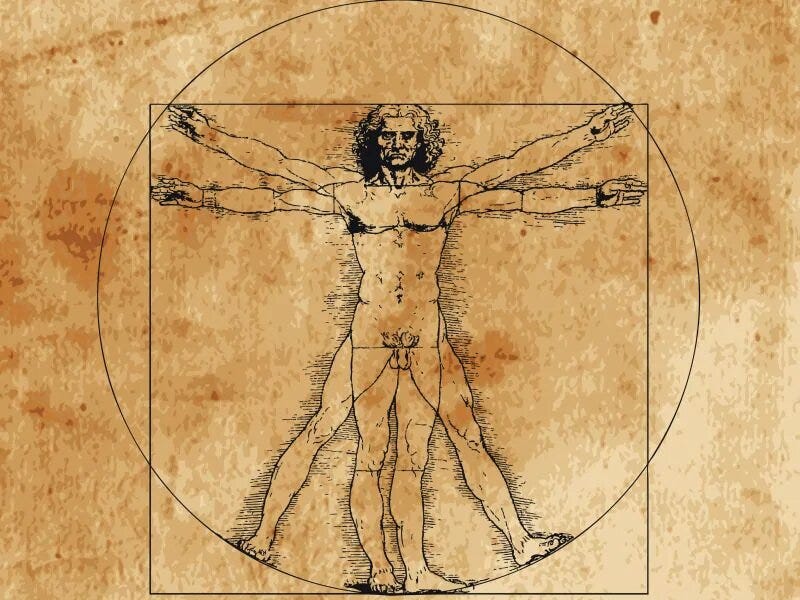
Note: Recently I have been writing about how to name and define classical education since 1) it is large and long hard to define and 2) it is defined variously by leaders in classical education and 3) it is often misunderstood or mischaracterized while being criticized. Readers may also be interested in this essay published in February, 2026: A Nice Definition of Classical Education
It ought not to be controversial to say that education is aimed at the cultivation and maturity of a human being. This is especially true if we distinguish between training (the acquisition of particular vocational skills) and education. Today, education is often confused with vocational training—a shift in understanding that largely accompanied the progressive educational movement from about 1890 to 1930.^1 Many of us are returning to the “classical” education that existed for more than a thousand years prior to the progressive revolution. What did we call classical education before 1890? Simply, education.
Classical education was rooted in the Christian tradition and therefore, historically, was largely—though not exclusively—Christian. There were, and are, Jewish, Muslim, and even secular schools that may rightly be called classical. Historically, however, classical education retained a thorough orientation toward the divine origin of man and his God-appointed purpose: to be conformed to Jesus Christ, the God-Man.^2
Yet it is precisely because Christ became fully human that this education is oriented toward helping human beings mature in all their God-given dimensions so that they might become like Christ himself—the ideal, indeed, the perfect man.
The Christian humanist Petrarch famously echoed Terence when he wrote, “I am human; nothing human is alien to me.”^3
Two things can be true at the same time. Light can behave as both wave and particle in ways we do not yet fully understand. We are both body and mind. Christ is both God and man. Education is simultaneously oriented by the transcendent and toward the human and earthly. We can begin at the top or the bottom and still find we engage both. Start with God and you will find his creation man, the image of God. Start with man and you will find God, his Creator.
An etymological illustration is pertinent. The Greek word for man is anthrōpos, which has often been interpreted as “the one who turns upward,” since ana means “up” and trepein (tropos) means “to turn.” Whether or not this folk etymology is linguistically precise, it beautifully expresses an enduring truth: man is that creature who lifts his face toward the heavens from which he receives his orientation from his Creator. The Latin word for man is homo, related to humus, meaning “earth,” “ground,” or “soil.” The human is of the humus—an earthling. From the Greek we are reminded that humanity is oriented toward God; from the Latin we are reminded that we tread the earth. Christ is the God-Man. We are the God-made earthlings.
In the Christian tradition, we are called to be fruitful and multiply, but we are also called to abide in Christ so that we might bear much fruit. We are instructed to be filled with the Spirit so that we might display the fruit of the Spirit, and we are told that a tree is known by its fruit. These are analogies; we humans are to be like fruit-bearing trees.
There is an ancient Greek word that essentially means “fruitfulness” or “flourishing”: eudaimonia. Aristotle used this word to describe a human being who has matured over time to display habitual virtue—a fruitful, flowering, flourishing life. The word is also commonly translated as “blessed” or “happy.”
The word eudaimonia possesses an interesting ancient etymology as well. Eu means “good,” and daimōn refers to a spirit or guiding presence. The blessed person, we might imagine, is one accompanied by a good spirit who guides him. The Christian knows the inward presence not merely of a good spirit but of the Holy Spirit, who works within us “to will and to act in order to fulfill his good purpose” (Phil. 2:13), enabling the believer to abide in Christ, the true Vine, and therefore to bear much fruit.
If we examine the fruit in order to know the tree, do we not begin with the effect in order to understand the cause? A holy person has known a holy God. A fruitful, flowering tree has known abundant rain and generous sunshine. A fruitful human being, like the tree in Psalm 1, has been planted beside streams of living water—the life-giving water of the Spirit. Thus a human education may rightly be called a divine education, named according to its effect rather than its cause.
The phrase “human flourishing” should conjure images of human flowering, human blossoming, and human maturity. This metaphor prompts a series of questions: What is a human? What is a human for? What is human nature? What is the end or purpose of a human life? We all possess some sense of what a fully formed, mature, cultivated human being is. What do humans do? What do they love to do? What do they do that animals cannot?^4
We worship. We make art. We reason with word and number.
Many have noted that human beings are homo adorans—man the worshiper—as the history of religion and architecture readily demonstrates. Others have described us as homo faber—man the maker—from the days of Tubal-Cain onward. Chesterton observed that art is the signature of man, noting that while we may carve images of birds, birds have yet to carve images of us. And we are homo sapiens, the wise or reasoning creature. We employ word and number to name, describe, explain, question, argue, persuade, count, measure, ponder, and sing. When we do these things well, others take notice, and the artifacts of our labor sometimes endure for centuries—like the pyramids, the Parthenon, and the Pantheon.
Studying—or even naming—the human ought naturally to interest us, for we ourselves are human. Yet we are human beings living “under the sun,” and we will not discover our final purpose until we trace our origin and sustenance back to the God who placed us here.^5 To name education after the human ought not to lead us away from God, but directly back to him. We are made from the dust, but made by God from the dust. The human is never truly separate from his Maker, for he lives within a cosmos that declares the Maker’s glory, while God’s law is written upon his heart. As Paul reminds us, quoting a Greek poet, “In him we live and move and have our being,” for we are indeed his offspring (Acts 17:28).
Even sin, though it separates us from God in one sense, does not remove God’s presence from the world; rather, it removes us from the enjoyment of his fellowship and forgiveness. As the old saying has it, called or not called, God is present. Thus we may begin with the human and immediately encounter the divine. We may begin with the immanent and discover the transcendent already present. We may begin with Christ lying as an infant in a manger, only to discover that God is with us. We need not be afraid to call a Christian education a human education.
When discussing education, we regularly encounter another difficulty worth naming. Education is an immensely large reality. It encompasses everything that contributes to a child becoming a fruitful, virtuous, wise, and holy adult. Can such a reality be adequately described in a single phrase? It is rather like attempting to describe American culture in a few words. Try defining “civilization” for your friends, and you will soon find yourself talking into the night. .
Still, we must use words—one after another—to describe even something as expansive as the cosmos or as multidimensional as education. We begin with one word, then another; then we form a sentence, followed by another. It is difficult to speak adequately about realities as large as the cosmos, civilization, religion, marriage, or education. It is perhaps hardest of all to speak about ourselves. Who are you, really?
Consider, for a moment, our own self-knowledge. I discover that I am two things simultaneously. I am both mind and body—a body-mind unity. I trust you recognize the same of yourself. Just how I can be both at once becomes increasingly mysterious the more I contemplate it. I may tell you what I think, but the “I” doing the thinking is somehow also the brain within my body—or so I believe.
I also discover that the condition of my body, and even where it is situated, influences how I think. If I am in acute pain, I am not the person to read a map or solve a puzzle. If I am exhausted from strenuous exercise and lack of sleep, I ought not to work on the family budget. But if I am rested and sitting with friends in a fine restaurant over good food and wine, I am ready to hear a poem discussed or follow the details of a delightful story.
Then there are the emotions. How shall we adequately explain their interaction with both mind and body? When I receive distressing news, I feel it in my stomach and lose my appetite. When unexpected joy arrives, I shout and leap. We call these interactions psychosomatic, but the technical term merely labels a mysterious experience every human being already knows because, well, we are human.
Could there, then, be a legitimate kind of education we might call an embodied education? Is there also an intellectual education? A psychological education? A formation of the affections? Might education be all of these at once?
Is there one best phrase for education? Why should we choose one description over another? We might ask the same question of marriage. Should we speak of an affectionate marriage, a strong marriage, an enduring marriage, a fitting marriage, or an admirable marriage?
Words necessarily come to us one by one. Sometimes we abbreviate for the sake of time and simply say, “It is a good marriage.” At other times, if the occasion warrants, we elaborate: “It is an affectionate, strong, enduring, fitting, and admirable marriage.” We seldom speak at such length, though we may write or speak this way for a particular purpose. If you were toasting your closest friend at his twenty-fifth wedding anniversary, you might happily add several more adjectives.
The same is true of education. We may say that a particular school offers simply “a good education,” and that comment may suffice in passing. But if we are enjoying a long cup of coffee with a friend while discussing schools for our children, saying only that a school offers “a good education” will not suffice. “How is it good?” we will ask. “In what ways?” At that point we naturally begin supplying additional adjectives and concrete examples. “It is academically challenging, and the teachers genuinely care for the students.” “It has an excellent music program and even offers individual tutorials.” And so the conversation unfolds.
Schools, like marriages, can be many things at once. No single adjective, no single illustration, no single story, can provide the whole picture. Still, we must begin somewhere. We might simply say, “They have a wonderful marriage,” or “That is an excellent school.” Then the story begins. Sometimes we begin with something intentionally provocative: “I didn’t know I was looking for a school like that—but I was.” Immediately we want to know more. Or someone says, “I have never witnessed a more joyful marriage.” Really? Tell me about it.
We can modify the word education with numerous adjectives and descriptive phrases, just as we can modify the word marriage. Consider these examples—as they might appear on a school’s website:
A Restful Yet Rigorous Education, Infused with the Liberal Arts and the Sustained Study of the Greatest Books Humanity Has Produced
A Holistic Education That Blends the Liberal Arts, Natural Science, and the Cultivation of Character
A College Preparatory Education Designed to Prepare Today’s Student for Tomorrow’s World
Each of these descriptions has its merits and its limitations. Yet each still leaves us wondering what the education itself is.
Sometimes, to avoid excessive length—or perhaps to provoke curiosity—we prefer a shorter phrase built around a single adjective (or a noun functioning adjectivally):
A liberal arts education
A Christian education
A humanities education
A classical education
A traditional education
A true education
A human education
All seven of these expressions are familiar in the circles in which I run. For better or worse, classical education has become the phrase most commonly used, though many people hearing it for the first time have little idea what it means. Frequently the expression classical Christian education is employed, adding another layer of meaning. Yet even among those immersed in the movement, the phrase is often shortened simply to classical education, with the Christian character assumed by context. Conversely, people rarely say Christian education and automatically mean classical education as well.
Each of these adjectives can legitimately describe the educational renewal taking place today, though classical education remains the dominant expression. Other combinations are equally possible: a classical humanities education, a Christian liberal arts education, a traditional Christian education, and so forth. We naturally vary our language according to our audience and our rhetorical purpose—which is simply good rhetoric.
One expression I especially appreciate in certain contexts is a truly human education. Certainly it leaves unstated some of what the other phrases communicate, but it is concise and thought-provoking, particularly for those unfamiliar with classical education. What makes an education truly human? What does that phrase actually mean? Is there a form of education especially suited to human nature and human flourishing?
The phrase also retains an echo of the humanities, a field most of us encountered at some point in high school or college. What exactly are the humanities? Is this a more humane education? The phrase naturally invites curiosity.
For some readers, however, a truly human education raises another concern. Does this imply a humanistic education—that is, one that denies the reality or relevance of the transcendent, of divine revelation, or of God himself? Should we not prefer a God-centered education rather than a man-centered one?
The church father Irenaeus famously wrote that “the glory of God is man fully alive,” and Christ himself declared, “I came that they may have life, and have it abundantly” (John 10:10). If human beings are created in the image of God, and if Christ himself became fully human, then surely genuine human flourishing and maturity not only assumes the presence of God but manifests his glory.^6
We naturally abbreviate our speech otherwise we become voluble and tedious. If I say that my wife is a superb poet—and she is—that does not mean I fail to value her as a mother. If I advocate for a liberal arts education, I am not thereby dismissing the natural sciences. Likewise, if I commend a truly human education, I am not suggesting that such an education is somehow non-classical or non-Christian.
Alas, words are always susceptible to misunderstanding. Their meanings vary according to audience and context. Christians themselves sometimes find the word classical ambiguous. Some understandably assume we have moved beyond the teachings—and often the errors—of Plato, Aristotle, Cicero, and other ancient writers. Why, then, should we desire a classical education?
I have used every one of the seven expressions listed above, just as I might employ many different words to describe a great marriage—or my own wife (trust me, she is great). The kind of education I love, and the kind I believe we must recover, is at once true, traditional, liberal arts, classical, Christian, and human. In various settings I find it helpful to call it a truly human education.^7
But if I had my way, we would simply call it what it has always been: education.
Endnotes
1. See Lawrence A. Cremin, The Transformation of the School: Progressivism in American Education, 1876–1957 (New York: Vintage Books, 1964); Diane Ravitch, Left Back: A Century of Battles over School Reform (New York: Simon & Schuster, 2000). The progressive movement increasingly redefined education in vocational, social, and utilitarian terms rather than as the cultivation of wisdom and virtue.
2. See Kevin Clark and Ravi Scott Jain, The Liberal Arts Tradition: A Philosophy of Christian Classical Education, expanded ed. (Camp Hill, PA: Classical Academic Press, 2021), especially chapters 1–2, on the Christian anthropology underlying classical education.
3. The saying originates with the Roman playwright Terence (Heauton Timorumenos, 77): Homo sum: humani nihil a me alienum puto (”I am human; I think nothing human is alien to me.”). Petrarch frequently employed the phrase in the service of Renaissance Christian humanism, emphasizing that all genuinely human pursuits ultimately belong under the lordship of Christ.
4. Pedagogy assumes an anthropology. Every educational philosophy rests upon an understanding of what a human being is and what human beings are for. Different anthropologies necessarily produce different pedagogies. Classical Christian education begins with the conviction that human beings are created in the image of God, are capable of knowing truth, loving goodness, and delighting in beauty, and therefore should be educated toward wisdom and virtue. See Kevin Clark and Ravi Scott Jain, The Liberal Arts Tradition (Classical Academic Press, 2021), chapters 1–2.
5. Ecclesiastes repeatedly describes life “under the sun” as incomplete when viewed apart from God (Eccl. 1:3; 12:13). Augustine similarly begins the Confessions by observing that our hearts remain restless until they rest in God (Confessions I.1).
6. Irenaeus, Against Heresies, IV.20.7: Gloria Dei vivens homo (”The glory of God is man fully alive.”); see also John Behr, Irenaeus of Lyons (Oxford University Press, 2013). Irenaeus continues, “and the life of man consists in beholding God,” making clear that human flourishing is inseparable from communion with God.
7.See the Humanitas institute at www.humanitasinstitute.org. I consult with this new institute which by name and mission leads with the ideal of “a truly human education” to provoke interest in the tradition of education we can also call traditional, liberal arts, classical, and Christian. The Humanitas Institute wants to reach those who have never heard about “classical education” and don’t understand the phrase when they hear or read it.
Christopher, I'm delighted to have stumbled on this essay. You're circling questions I'm circling too, just from a different angle. I enjoyed reading the Christian perspective here even though it isn't one I follow - my own view of education comes from phenomenology, especially Merleau-Ponty.
Which is why I felt a little spark when you said "I discover I am two things simultaneously. I am both mind and body - a body-mind unity." The mystery that you point to right after, just how can we be both at once, is a real one. But I don't think it's the "both" that makes it mysterious. Merleau-Ponty's bet is that we don't begin as two things that then have to be joined but that the body is always already one, not a vessel carrying the other around. The body and mind are singular.
Which is also why I want to press on a question you raise later on - about whether there might be a legitimate embodied education. My answer is that all education is already embodied, whether we attend to it or not. Bodies take on new skills, new ways of moving through the world, new ways of being, and that happens regardless of the care we put into it. What formal schooling manages is not disembodiment, because that isn't possible - we are always embodied - but a suppression of the body. Sensorially thin rooms, bodies told to sit still... My own classroom was guilty of that.
My hope is for an education that is truly in-the-world, that takes our entanglement with everything around us as the base condition rather than the obstacle, and treats mind and body as the one thing they already are.
Thanks for this, Christopher! Gave me lots to think about!
Splendid! I have been doing a series trying similar ideas … thank you for this!